
Quick Answer
AI SEO optimization means using AI to improve SEO audits, search intent mapping, content structure, internal linking, technical checks, and AI search readiness without replacing expert judgment. The goal is not to publish more generic AI-written pages. The goal is to use AI SEO tools and structured workflows to create useful pages that can perform in classic Google Search while also becoming easier to understand, summarize, and cite in AI Overviews and AI Mode.
AI SEO optimization has become important because SEO teams are under pressure to move faster while maintaining quality. AI can help with audits, briefs, keyword grouping, content reviews, and technical checks, but faster output does not automatically mean better rankings.
For a strong foundation, start with this guide on AI SEO in 2026 before building your optimization workflow.
This matters more after Google’s March 2026 core update cycle, which reinforced broad quality evaluation across search results. Google’s May 2026 AI-search guidance also reaffirmed that SEO fundamentals still support visibility in generative search features like AI Overviews and AI Mode.
This guide explains what AI SEO optimization means, what it is not, how teams can use it without creating commodity content, and how SEOSpyder’s AI Search Readiness Snapshot can help you prioritize faster wins.
In This Guide
What Is AI SEO Optimization?
AI SEO optimization is the process of using artificial intelligence to improve SEO decisions and execution. It can help SEO teams analyze keywords, review search intent, detect content gaps, improve headings, check internal links, identify technical issues, and prepare pages for AI search optimization.
But AI SEO optimization is not the same as asking a chatbot to write a full blog and publishing it as-is. That approach often creates commodity content: pages that repeat the same definitions, lists, and generic advice already available across search results.
Simple definition
AI SEO optimization means using AI to make SEO audits, content improvements, and search readiness checks faster, more structured, and more consistent.
1
Audit
Find SEO gaps across content, structure, and technical setup.
2
Prioritize
Separate fast wins from low-impact changes.
3
Improve
Update answers, links, schema, headings, and quality signals.
Why AI SEO Optimization Matters After the 2026 Search Updates
Google’s March 2026 core update started on March 27, 2026, and finished on April 8, 2026, according to the Google Search Status Dashboard. Core updates do not reward one small trick. They reassess broad quality signals across content, relevance, usefulness, and trust.
Google’s guidance for generative AI features also makes the direction clear: SEO best practices still matter because AI Overviews and AI Mode rely on Google’s Search systems. That means AI SEO optimization should improve page quality, not bypass SEO fundamentals.
13
Days of rollout
Google’s March 2026 core update ran from March 27 to April 8.
May
AI search guidance
Google reaffirmed that SEO remains relevant for AI search experiences.
0
AI-only shortcuts
The safer path is better content, crawlability, structure, and usefulness.
Important note
AI SEO optimization should not be used to mass-produce thin pages. It should help teams improve page quality, reduce manual audit time, and make content easier to understand for readers and search systems.
Find faster SEO wins before publishing
Use SEOSpyder to review content quality, technical SEO, internal links, and AI-search readiness before your next update cycle.
AI SEO Optimization vs Generic AI Content Generation
The biggest mistake teams make is thinking AI SEO optimization means “generate more content.” The better approach is to use AI to improve the quality and performance potential of pages that already have a clear purpose.
| Factor | Generic AI Content | AI SEO Optimization |
|---|---|---|
| Goal | Produce more text quickly. | Improve pages for search intent, quality, and discoverability. |
| Output | Generic summaries and repeated advice. | Clear answers, stronger structure, and better SEO readiness. |
| Risk | Thin or commodity content. | Lower risk when reviewed by experts. |
| Best use | Drafting ideas and outlines. | Audits, content refreshes, internal links, and AI-search readiness. |
A Practical AI SEO Optimization Framework for Faster Wins
The best AI SEO optimization workflow starts with pages that already matter: pages with impressions, rankings, internal link potential, outdated content, or conversion value. Then use AI to audit, prioritize, and improve them with human review.
Start with page selection
Choose pages that already have SEO potential: ranking pages stuck on page two, blogs losing traffic, pages with weak CTR, or commercial pages missing supporting content. This keeps optimization focused on faster wins.
Run a content and technical audit
Review metadata, headings, crawlability, content depth, schema, page speed, internal links, and topical coverage. For site authority checks, pair this with a domain authority and page authority checker.
Improve search intent coverage
Use AI SEO tools to identify missing questions, weak definitions, thin examples, and unsupported claims. Then add useful sections that actually help the reader instead of filling the page with generic paragraphs.
Strengthen AI-search readiness
Add direct answers, clear H2s, comparison tables, FAQs, schema, and concise explanations. This supports answer engine optimization and makes the page easier for AI systems to understand and summarize.
Add internal links with context
Connect the page to related resources such as your guide on non-commodity content for AI search and your guide on how to use SEO analysis tools.
Review before publishing
AI can suggest improvements, but SEO managers should still review accuracy, brand voice, examples, prioritization, and whether the updated page gives readers something genuinely useful.
Common AI SEO Optimization Mistakes
Mistake 1: Optimizing every page equally
Not every page deserves the same effort. Start with pages that already have rankings, impressions, commercial value, or clear refresh potential.
Mistake 2: Using AI only to rewrite content
Rewriting weak content does not fix weak strategy. Use AI to diagnose intent gaps, structure problems, missing links, and unsupported claims.
Mistake 3: Treating AI search optimization as a hack
AI search visibility still depends on useful, crawlable, well-structured pages. Do not ignore classic SEO while chasing AI Overviews or AI Mode.
Mistake 4: Publishing without expert review
AI can speed up optimization, but humans should still verify facts, tone, examples, business relevance, and whether the page feels trustworthy.
SEOSpyder AI Search Readiness Snapshot Use Case
The practical use case for SEOSpyder is to turn AI SEO optimization into a structured review process. Instead of guessing what to update, teams can review pages across content quality, technical SEO, internal linking, and AI-search readiness.
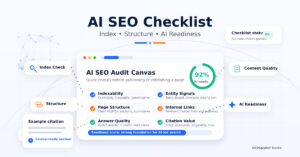
A SEOSpyder AI Search Readiness Snapshot can help identify whether a page has a direct answer, clear search intent match, useful internal links, schema opportunities, original value, and enough structure to support answer engine optimization.
| Snapshot Area | What to Check | Why It Matters |
|---|---|---|
| Intent match | Does the page solve the real search need? | Improves relevance and user satisfaction. |
| Content quality | Does the content add value beyond generic AI output? | Reduces commodity content risk. |
| AI-search readiness | Are answers, headings, FAQs, and schema clear? | Helps AI systems understand and summarize the page. |
| Technical readiness | Are metadata, crawlability, speed, and mobile layout clean? | Keeps the page eligible and easier to process. |
Best practical approach
Use SEOSpyder before publishing new AI-assisted content, after major Google updates, and when refreshing pages that are close to ranking but not improving.
Pre-Publish Checklist for AI SEO Optimization
Before publishing, check:
✓ Did you choose a page with real SEO upside?
✓ Does the page answer the main query early?
✓ Are technical SEO issues fixed or clearly prioritized?
✓ Does the content add insight beyond generic AI summaries?
✓ Are internal links useful and contextually placed?
✓ Are FAQs and schema aligned with visible page content?
✓ Has a human reviewed accuracy, examples, and brand voice?
Use AI SEO optimization to find faster wins
Use SEOSpyder to audit content quality, technical SEO, internal links, and AI-search readiness before your next content refresh or publishing cycle.
For SEO managers, content leads, founders, and agencies building AI-ready organic growth.
Frequently Asked Questions






No comment yet, add your voice below!