
Quick Answer
Semantic SEO means optimizing content around meaning, search intent, entities, topic relationships, and complete answers instead of only exact-match keywords. A strong semantic SEO page answers the main query fast, covers related subtopics, connects useful internal pages, and adds original value that users, search engines, and AI-led search systems can understand.
In This Guide
What Is Semantic SEO?
Semantic SEO is the practice of building content around the complete meaning of a topic. Instead of targeting one exact keyword repeatedly, you cover the main intent, related questions, entities, subtopics, examples, comparisons, and next steps that help users understand the subject properly.
Simple definition
Semantic SEO helps your page rank by covering the meaning of a topic, not just the exact words in a keyword.
Real example
A weak page about “semantic SEO” only defines the term. A strong page explains search intent, topic clusters, entity relationships, internal links, content depth, AI search visibility, mistakes, checklists, and how to apply the concept in real SEO workflows.
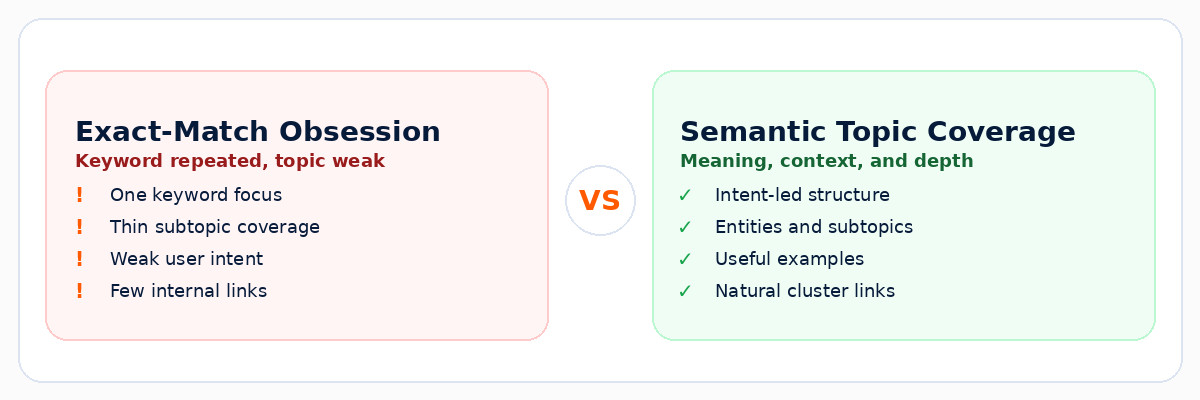
Semantic SEO vs Exact-Match Keyword SEO
Keywords still matter because they show demand and intent. But keywords are only the starting point. Semantic SEO turns keyword demand into complete, useful, connected content.
| Old Exact-Match Approach | Better Semantic SEO Approach |
|---|---|
| Repeats the target keyword many times. | Answers the main query and related user questions naturally. |
| Creates separate thin pages for close keyword variations. | Combines related intent into one stronger resource when it helps the user. |
| Focuses only on ranking for one phrase. | Builds topical authority across entities, subtopics, use cases, examples, and internal links. |
| Often produces generic content. | Adds examples, workflows, expert notes, original value, and decision support. |
Why Semantic SEO Matters in 2026
Search is more intent-led and answer-led. Google Search, AI Overviews, AI Mode, and answer engines need pages that explain topics clearly, not pages that only repeat a phrase.
1
Intent depth
Covers what users actually want to know, compare, fix, or decide.
2
Topic coverage
Explains related entities, subtopics, examples, comparisons, and questions.
3
AI readiness
Makes pages easier to understand, retrieve, summarize, and cite.
Important note
Semantic SEO does not mean ignoring keywords. Keywords still guide demand and intent. The mistake is treating one exact phrase as the entire topic.
A Practical Semantic SEO Framework
Use this framework before creating a new SEO page or refreshing an existing one.
| Layer | What to Cover | Helpful Example |
|---|---|---|
| Primary intent | The direct answer to the user’s main query. | “What is semantic SEO?” answered clearly near the top. |
| Related entities | Concepts, tools, systems, and terms linked to the topic. | Search intent, entities, topic clusters, internal links, AI Overviews. |
| Subtopics | Questions, comparisons, examples, workflows, and mistakes. | Semantic SEO vs keyword SEO, checklist, workflow, mistakes, FAQs. |
| Internal context | Links to related cluster pages and supporting guides. | Connect to entity SEO, LLM SEO, and AI content optimization. |
Step-by-Step Semantic SEO Workflow
Use this workflow when planning a new page or upgrading existing content for better topic coverage.
Start with the real search intent
Ask what the user wants to understand, compare, fix, or decide. Semantic SEO starts with the user need, not a list of repeated phrases.
Map entities and subtopics
List connected terms, examples, questions, tools, workflows, and concepts users expect. For AI-led visibility, this connects naturally with AI Search SEO.
Build answers in layers
Start with a direct answer. Then add definitions, examples, frameworks, comparison tables, FAQs, and practical steps. This improves user experience and SEO for AI Overviews.
Add original value
Avoid generic summaries. Add product insights, expert notes, screenshots, examples, mini checklists, decision frameworks, or real workflow details. This is what makes content more useful than a basic AI answer.
Review before publishing
Before publishing, check topic coverage, answer clarity, internal links, originality, mobile readability, and technical readiness. This prevents thin or AI-generic content from going live.
Semantic SEO Checklist
Use this checklist before you publish or refresh an important page.
| Check | What Good Looks Like |
|---|---|
| Main query answered early | The user gets a clear answer in the first section. |
| Related subtopics covered | The page answers follow-up questions users are likely to ask. |
| Entities are clear | Important concepts, tools, features, and related terms are explained naturally. |
| Internal links support context | The page links to relevant cluster pages, not random posts. |
| Original value added | Examples, workflows, tables, checklists, expert notes, or product-specific insight are included. |
Common Semantic SEO Mistakes
Mistake 1: Treating semantic SEO as keyword stuffing 2.0
Adding more related terms is not enough. The page must explain the topic better and help the user make progress.
Mistake 2: Creating thin pages for every variation
Do not create separate weak pages for every close keyword. Combine related intent into one stronger resource when it serves the user better.
Mistake 3: Ignoring internal links
Semantic SEO depends on context. Internal links help users and search systems understand how your content cluster fits together.
Mistake 4: Publishing generic AI summaries
AI can help with structure and research, but final content still needs expert review, real examples, originality, and clear usefulness.
SEOSpyder AI Search Readiness Snapshot Use Case
The practical use case for SEOSpyder is to help teams check whether a page covers a topic deeply enough for classic SEO and AI-led search visibility.
| Snapshot Area | What It Checks | Why It Matters |
|---|---|---|
| Intent alignment | Does the page solve the main user need? | Improves relevance and usefulness. |
| Topic coverage | Are related subtopics and entities covered? | Supports semantic relevance. |
| Answer clarity | Can users and search systems understand the page quickly? | Supports better extraction and user experience. |
| Original value | Does the page add insight beyond generic summaries? | Prevents commodity content. |
Build topic coverage that performs beyond exact-match keywords
Use SEOSpyder to review content quality, topic coverage, technical SEO, internal links, answer clarity, and AI-search readiness before your next publishing cycle.
For SEO managers, content leads, founders, and agencies building AI-ready organic growth.




No comment yet, add your voice below!